
Definition
The lifetime (LT) (also called mission time (MT)) is how long the SIS is planned to operate prior to being replaced or overhauled as new. This is a key decision made by the design team. This would be less than the useful life, which is a related concept.
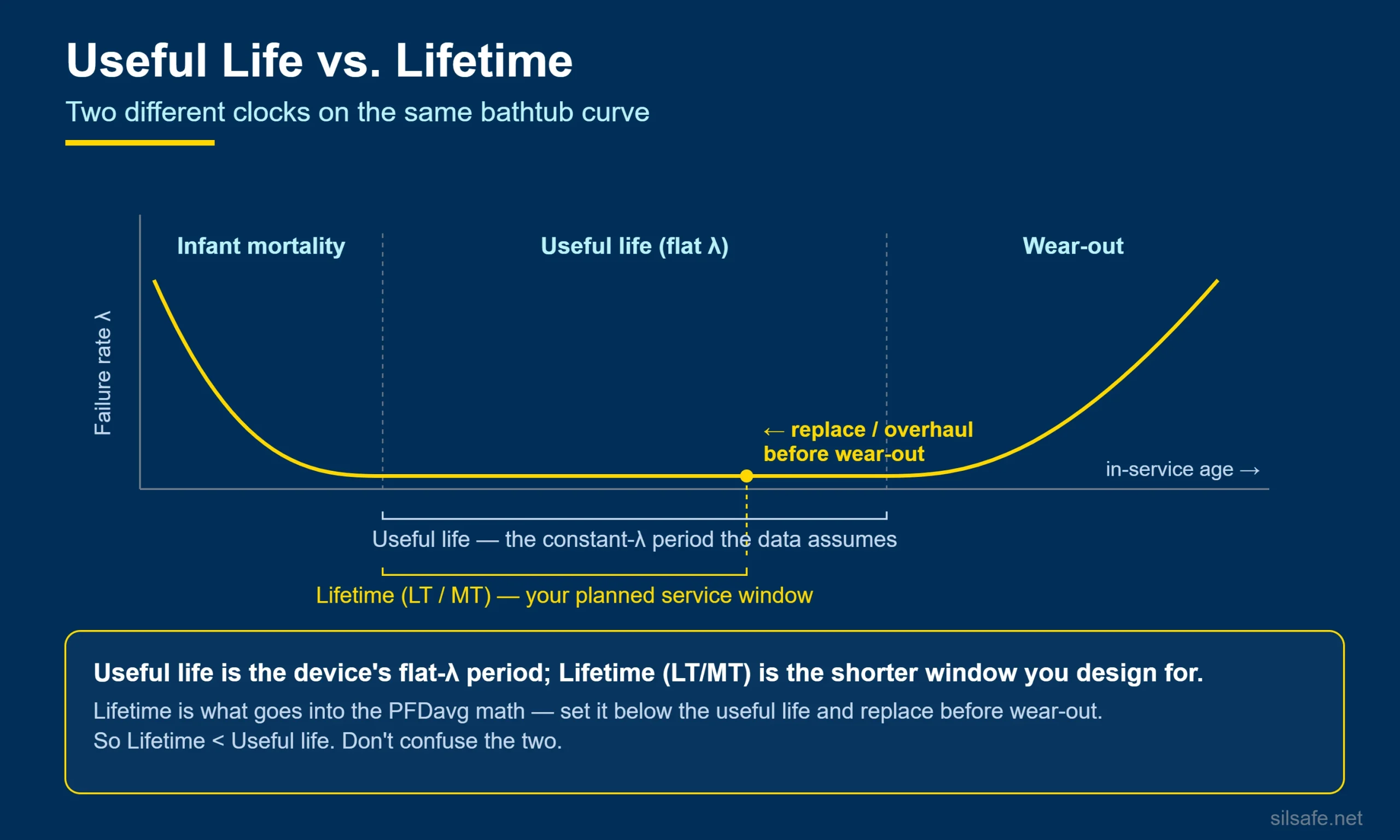
This is used directly in the PFDavg calculations and listed typically as LT. Some practitioners use MT, it is the same thing.
Key Points:
- Typically, 10-20 years for safety systems.
- Essentially it is the period between major upgrades or replacements.
- Do not confuse with Useful Life
- Different components of the SIS could have different lifetimes
Example:
A safety PLC certified for a 15-year lifetime under SIL 3 conditions. At the end of that, you may be able to do some sort of maintenance to reset the clock. But for a PLC, it likely would need replacement. For a final element that is an automated ON/OFF valve, LT could mean a complete clean, rebuild, and seat replacement. Perhaps not a completely new valve. Again, whatever the manufacturer says.
See Also: useful life
Cited Source:
- IEC 61508-1:2010, Clause 7.6.2.9, note 7
- Power Quality Blog – Lifetime and Reliability – related to power distribution but it’s the same concept