Functional Safety Fundamentals, SIL Math and Reliability
2oo3 Architecture: The Design Decision Behind Majority Voting
2oo3 voting gives a SIF a hardware fault tolerance of 1 without doubling the spurious trip rate. See how 2oo3 compares with 1oo1, 1oo2, and 2oo2 on the same numbers,…

Where Does the Data Come From? A Guide to Failure Rate Data Sources in Functional Safety
For most SIL verification the certificate and safety manual already answer the data question. This guide covers what to do when they do not: plant records, OREDA, the PDS handbook,…

Functional Safety Fundamentals, SIL Math and Reliability
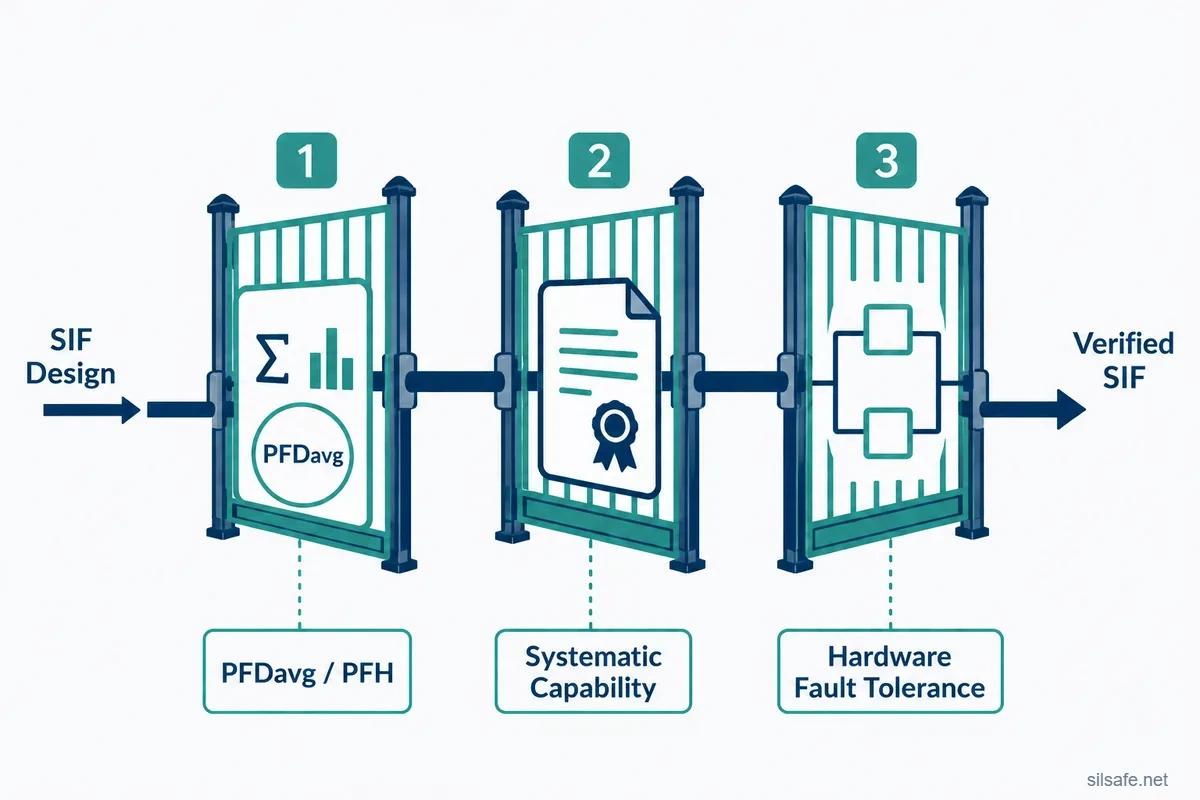
SIL Verification: The Three Gates Every SIF Must Clear
SIL verification under IEC 61511 is three independent gates, all of which must pass: PFDavg, systematic capability, and architectural constraints. The gate that gets the most attention rarely fails an…

Failure Rates in Functional Safety: A Practical Guide for Working Engineers
Failure rates are central to SIL verification, device selection, diagnostics, and proof testing. This guide explains λDU, λDD, λSU, and λSD, where the values come from, and how functional safety…

How to Apply the Beta Factor: A Practical Guide to Common Cause Failures in SIL Verification
Learn how to apply the beta factor (β) in SIL verification and understand its link to common cause failures. This guide walks through where β values come from, how they…

Spurious Trip Rate Explained: 6 Facts Every Functional Safety Engineer Should Know
Spurious Trip Rate (STR) is often overlooked in functional safety. Learn what STR is, how it’s calculated, and why balancing STR with PFDavg matters.

How to Use Proof Test Coverage (Cpt) to Improve PFDavg
Proof test coverage (Cpt) plays a major role in determining whether a SIF meets its target SIL. This article explains what Cpt is, how it affects PFDavg, and how even…

How MTTR Affects Your SIL Calculations: A Beginner’s Guide to Mean Time to Restore
Learn how MTTR (Mean Time to Restore) fits into PFDavg and STR in IEC 61511 compliance. A clear, beginner-friendly guide for functional safety.

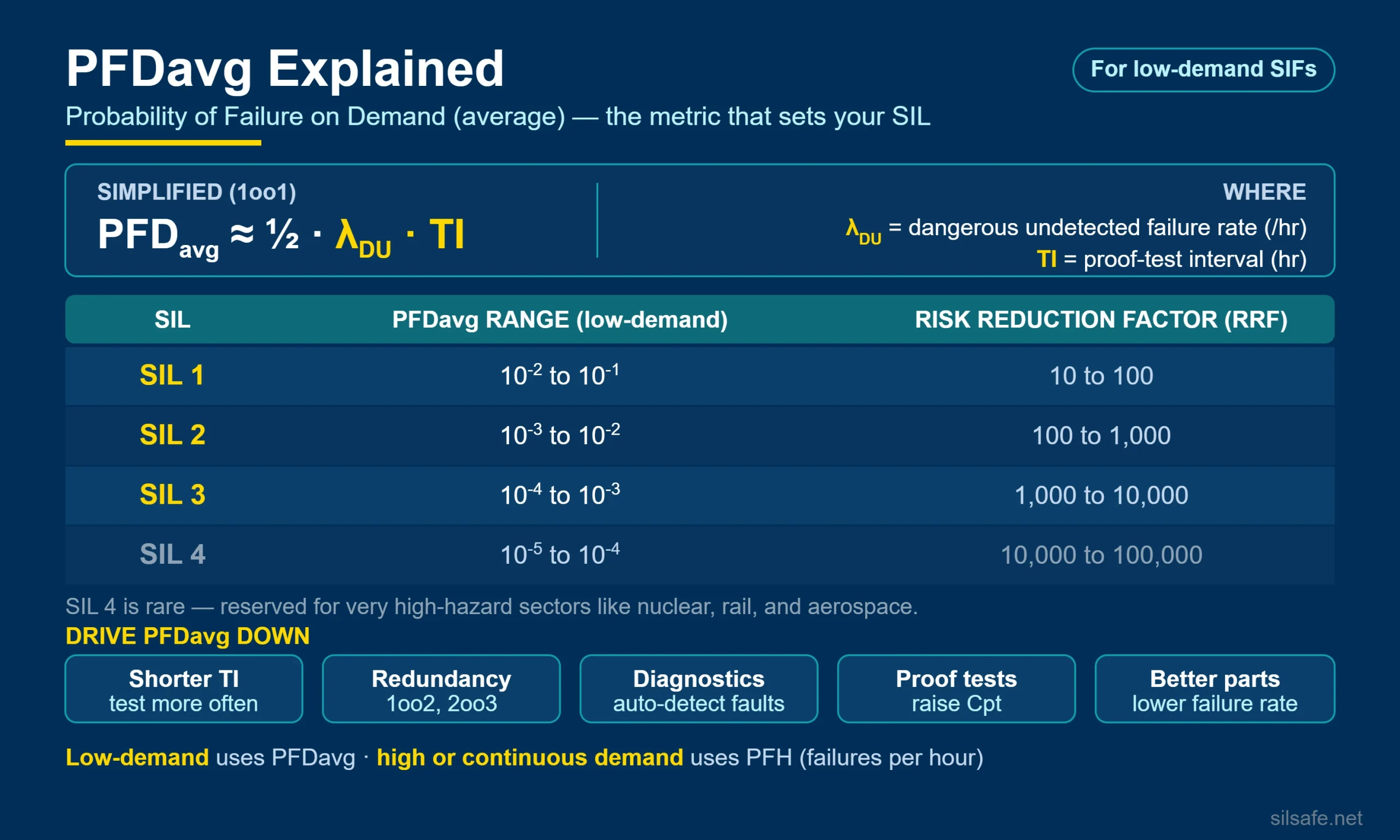
PFDavg Explained: 6 Essentials for Getting Started with SIL Calculations
This beginner-friendly guide explains what PFDavg (Probability of Failure on Demand) means in functional safety, how it's calculated, and why it matters under IEC 61511. With clear examples, key definitions,…