
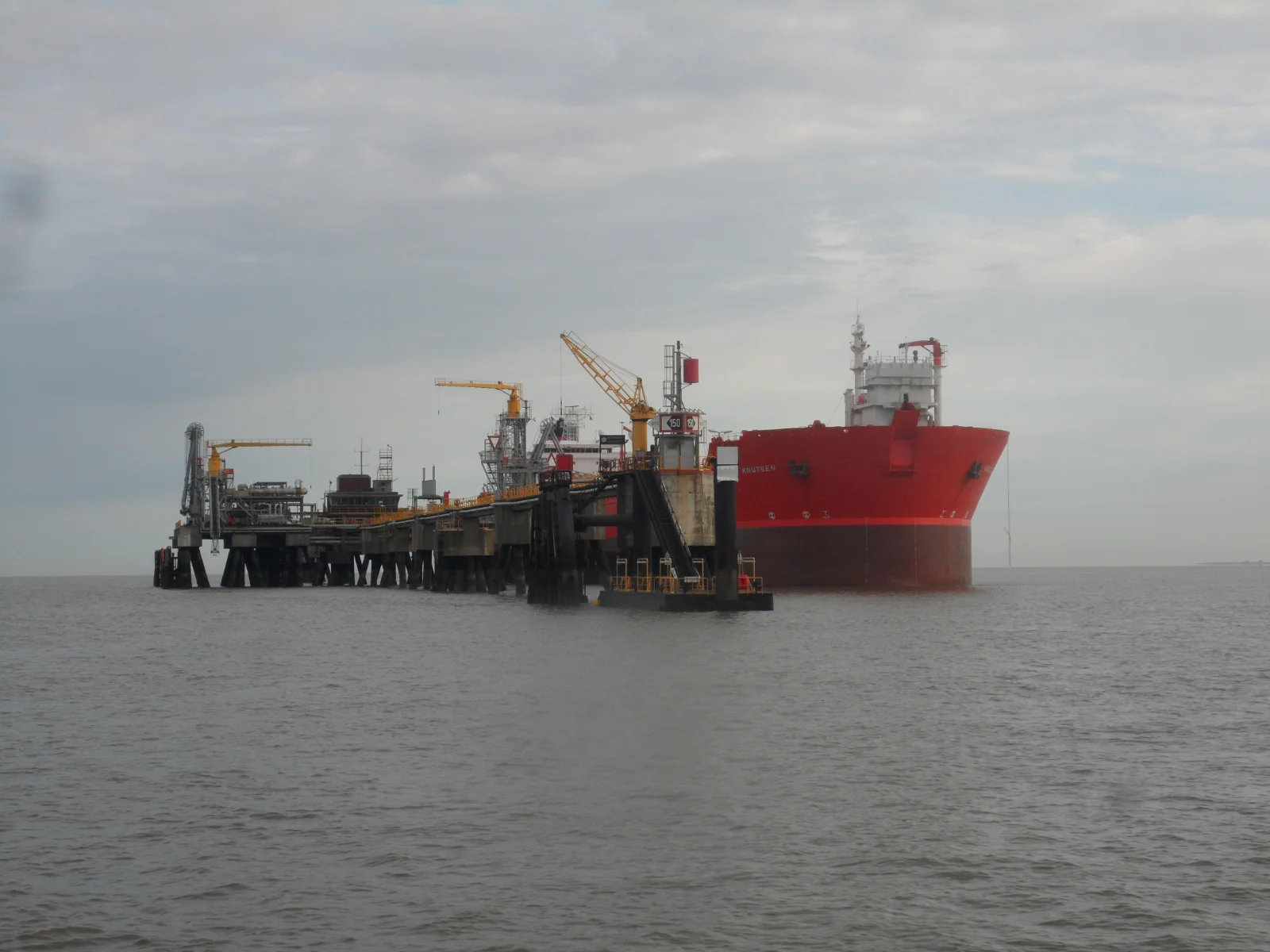
An FSO (floating storage and offloading vessel) is the simplest member of the floating production family. It stores crude and offloads it to a shuttle tanker, and that is the whole job. Processing happens somewhere else, usually on a nearby platform or FPU that pipes finished crude across. Take the processing topsides off an FPSO and what is left is an FSO. That does not make it dull. A hull holding a million barrels of crude has hazards of its own, and the protective functions follow them: inert gas to hold cargo tank atmospheres below the oxygen level that supports combustion, high and high-high level protection against an overfill, and an offloading emergency shutdown that can stop transfer and part the hose without spilling.
Functional safety relevance: Partly. There is no process, so there are no process safety instrumented functions, but tank overfill protection, inert gas control, and the offloading shutdown are routinely assessed and implemented as ones.
Key Points
- Stores and offloads only. No separation, no compression, no treatment on board.
- Inert gas generation and cargo tank atmosphere control are the defining protective systems, alongside high-high level shutdown on the tanks.
- Normally paired with a fixed platform or an FPU that does the processing and pipes finished crude across to it.
Example
A shallow-water field runs a fixed wellhead and processing platform with no room for storage. Finished crude is piped a short distance to a permanently moored FSO, which holds it until a shuttle tanker arrives every week or two. The instrumented protection on that FSO is concentrated on tank level, inert gas, and the offloading shutdown, not on any process.
Cited Sources
- API RP 2FPS, Planning, Designing, and Constructing Floating Production Systems
- IMO SOLAS Chapter II-2 — fire protection and inert gas system requirements for tankers