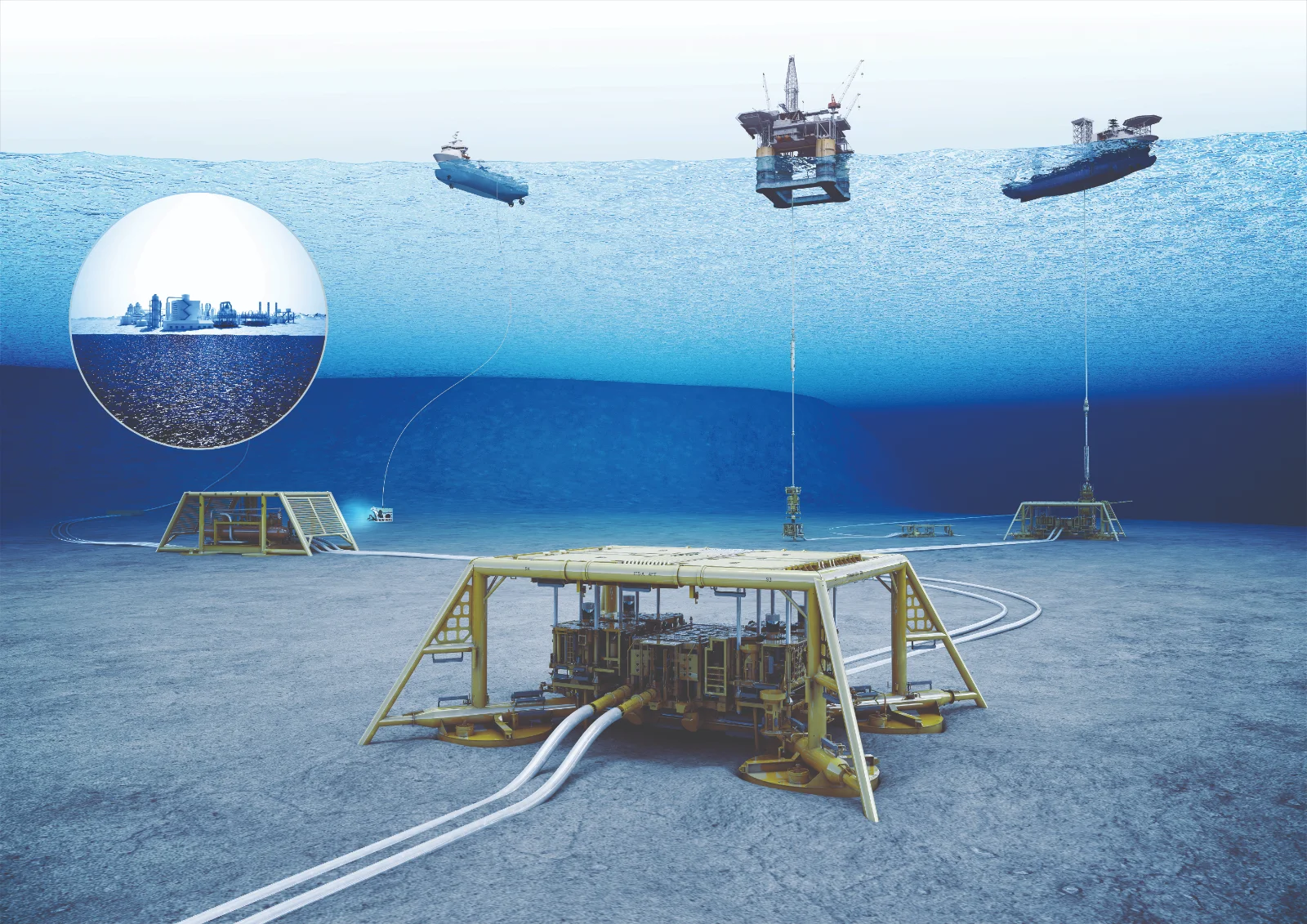
A subsea production system, usually called a subsea tieback, puts the wells, trees, and manifolds on the seafloor and pipes production to a host that may be tens of kilometres away, with no platform over the wells at all. It is the cheapest way to develop a small or marginal field near an existing facility, and increasingly the only way to develop anything in very deep water.
The safety architecture has to solve a problem the surface facilities never face, which is that nobody can walk up to any of it. Manual isolation is not available, proof testing means mobilizing a vessel and a remotely operated vehicle, and a failed instrument may stay failed for a long time. That is why HIPPS earns its keep here, protecting a lower-rated flowline against full shut-in wellhead pressure with an instrumented function instead of with relief.
Functional safety relevance: Yes, and API RP 17V exists specifically to extend IEC 61511 to subsea safety systems. A subsea HIPPS is among the highest integrity instrumented functions anyone builds.
Key Points
- Wells, trees, and manifolds sit on the seafloor and tie back to a host platform, FPU, or shore facility.
- HIPPS and subsea isolation valves carry protection that a surface facility would handle with relief or with manual isolation.
- Testing and repair need a vessel and an ROV, so proof test intervals are long and the reliability case has to survive them.
Example
A three-well development ties back 25 km to an existing host. The flowline is rated below full shut-in wellhead pressure, so a HIPPS on the seabed closes on high pressure to protect it. Proof testing that HIPPS is a planned campaign with a vessel on station rather than a routine walk-down, and the long interval that forces is what drives the redundancy the function needs.
See Also: HIPPS, WHP, proof test
Cited Sources
- API RP 17V, Analysis, Design, Installation, and Testing of Safety Systems for Subsea Applications — written to supplement IEC 61511 for subsea safety systems
- API RP 14C, Analysis, Design, Installation, and Testing of Safety Systems for Offshore Production Facilities