
An FPU (floating production unit) is a moored offshore facility that takes the raw stream from subsea wells, conditions it for transport, and exports it by pipeline. It separates the stream into gas, water, and liquid hydrocarbons, then dries, compresses, and meters the gas. That makes it a gas processing plant, not a refinery, because nothing is converted into a different product.
It exists because raw wellhead fluid cannot survive a long subsea run. As the stream cools, liquids drop out and water combines with gas to form ice-like hydrates that plug the line, and reservoir pressure alone will not carry it to shore. That equipment has to sit somewhere people can reach it, and the seafloor is not that place. What separates an FPU from an FPSO is storage, and an FPU has none.
Functional safety relevance: Yes. Separation, compression, and gas export are all functions that carry safety instrumented protection, so an FPU runs a full IEC 61511 life-cycle the same way an onshore gas plant does.
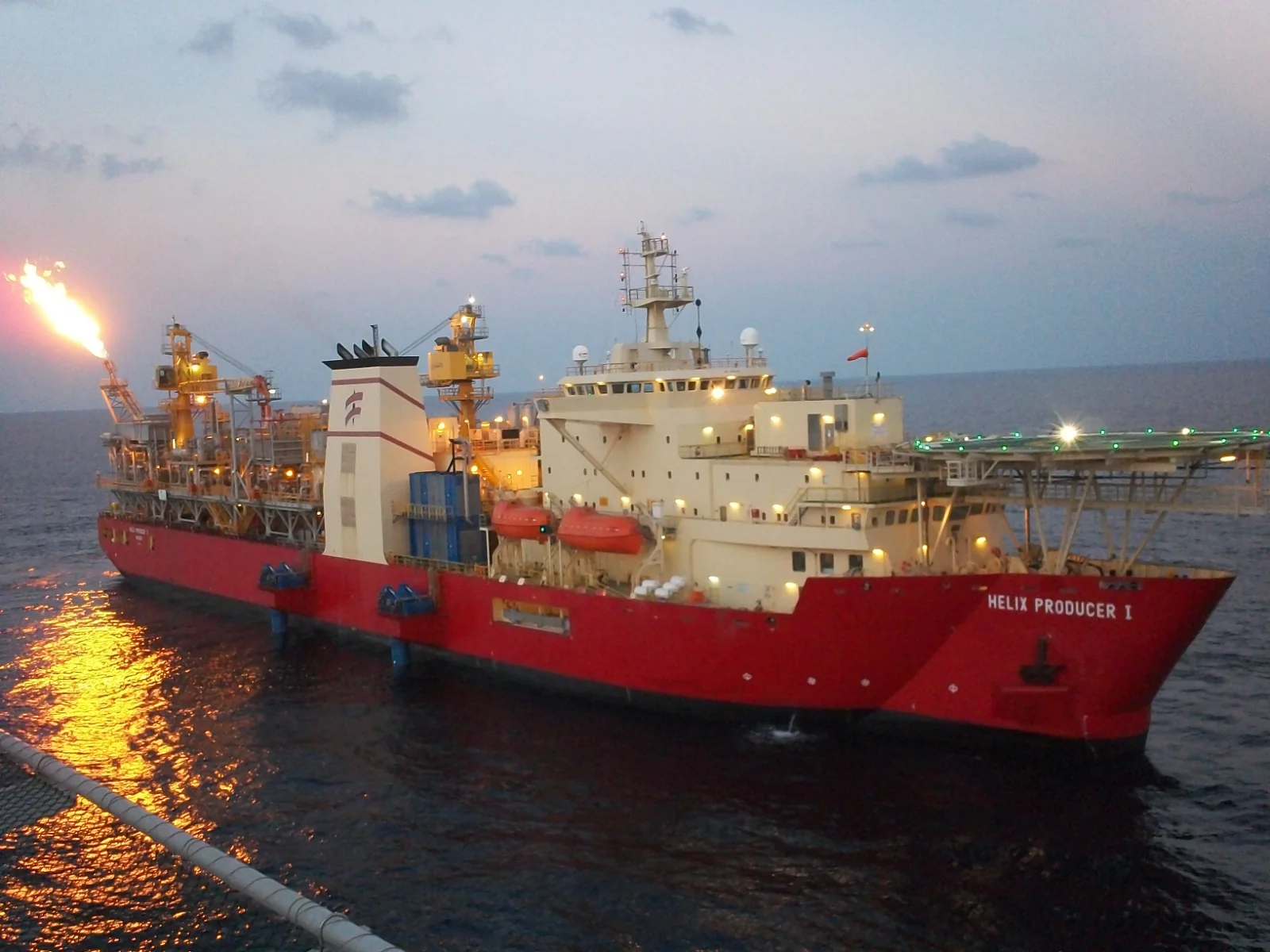
Key Points
- Separates, dries, compresses, and meters the wellstream, then exports it by pipeline. There is no storage on board.
- Gas developments favor an FPU because the product leaves continuously by pipeline. Oil needs the hull tanks of an FPSO because it waits for a tanker.
- Deep water drives the choice, not geography. The Gulf of Mexico, Brazil, West Africa, and the North Sea all reach for floating production for the same reason.
Example
The Sakarya gas field sits in more than 2,000 m of water about 175 km off Eregli in the Black Sea. Phase 3 adds an FPU sitting essentially on top of the wells to process the raw stream, which then travels roughly 183 km by pipeline to the onshore terminal at Filyos. Piping unprocessed wellhead fluid that whole distance at that depth is not a cheaper alternative, it is not a workable one.
See Also: FPSO, FLNG, CPF, subsea tieback
Cited Sources
- API RP 2FPS, Planning, Designing, and Constructing Floating Production Systems
- Offshore Technology — Sakarya Gas Field Development, Black Sea, Turkey