
An FLNG (floating liquefied natural gas) facility treats the raw gas stream from subsea wells, liquefies it, stores the LNG in insulated tanks, and offloads it to LNG carriers that pull alongside. Liquefaction chills the gas to roughly -162 °C, which shrinks it about 600-fold, and that is what makes storing and shipping it from a vessel practical. In that sense an FLNG is the gas world’s answer to an FPSO, but it earns its own name because liquefaction is a far bigger and more complex process than anything an FPSO does to oil. The trade is straightforward. You skip the subsea export pipeline and the onshore terminal entirely, and you pay more per unit of capacity to do it.
Functional safety relevance: Yes, and heavily. Liquefaction stacks cryogenic and large refrigeration hazards on top of ordinary gas processing, so an FLNG typically carries more safety instrumented functions than anything else in this category.
Key Points
- Treats, liquefies, stores, and offloads gas on a single hull, so no export pipeline or onshore LNG plant is needed.
- Chosen for gas fields far enough offshore, or in waters unstable enough, that hundreds of kilometres of pipeline plus a shore terminal is unattractive.
- Cryogenic process, large refrigeration compressors, and LNG storage on a moving hull add up to a far larger hazard inventory to protect than an FPU carries.
Example
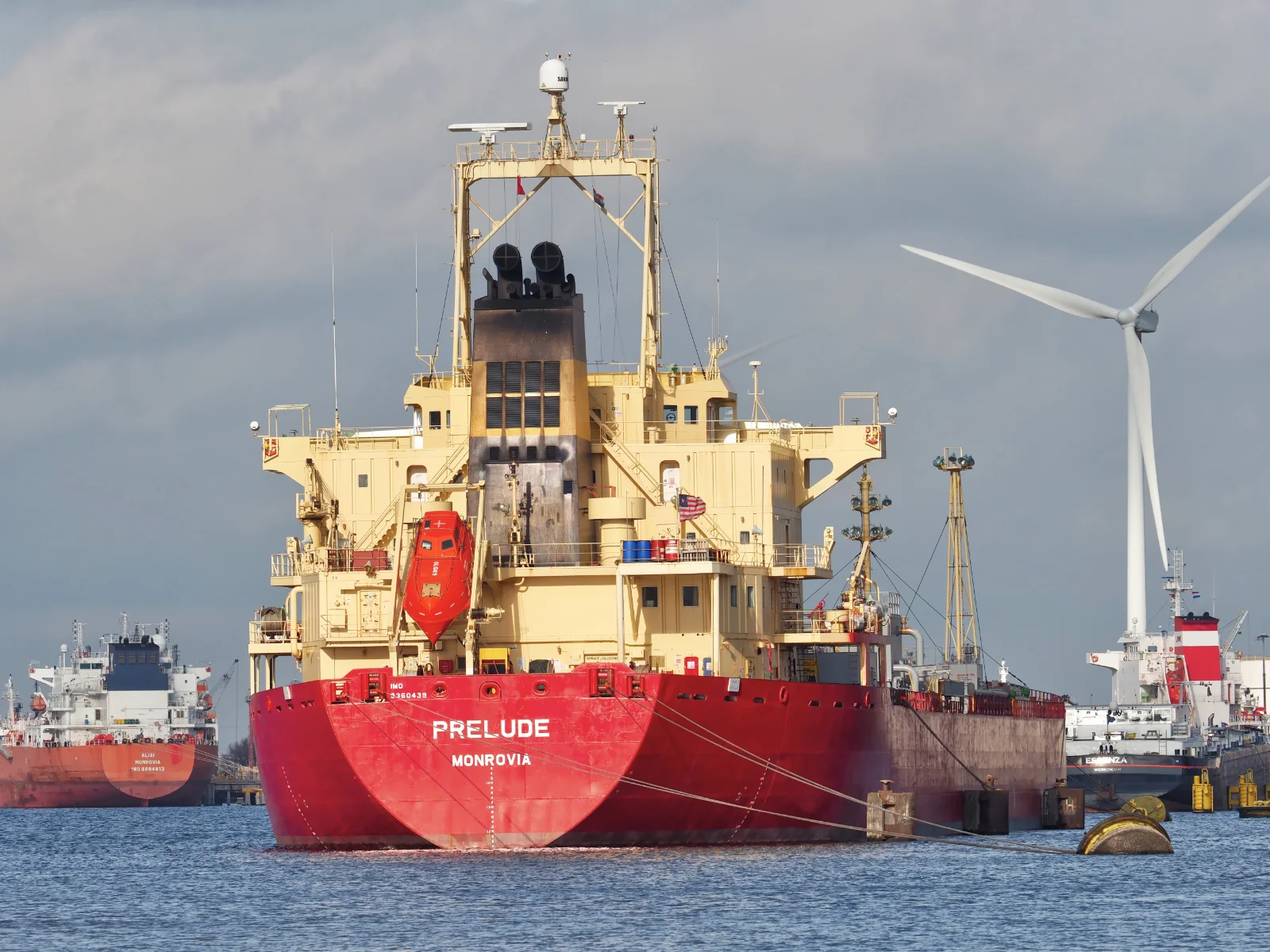
Shell’s Prelude, off Western Australia, is 488 m long, because it carries a small onshore LNG plant’s worth of cryogenic and refrigeration equipment plus storage on one hull. Eni’s Coral Sul, off Mozambique, does the same job at a smaller scale, producing LNG over a gas field that has no pipeline to shore.
See Also: FSRU, onshore LNG liquefaction terminal, BLEVE
Cited Sources
- API RP 2FPS, Planning, Designing, and Constructing Floating Production Systems
- Ship Technology — Prelude Floating Liquefied Natural Gas (FLNG) Project