On August 25, 2026, an explosion and fire tore through the pyrolysis unit at the Amur Gas Chemical Complex, a new petrochemical plant in Russia’s Far East. Fifteen workers were killed, 14 of them Chinese nationals, and around 150 people were treated for injuries.
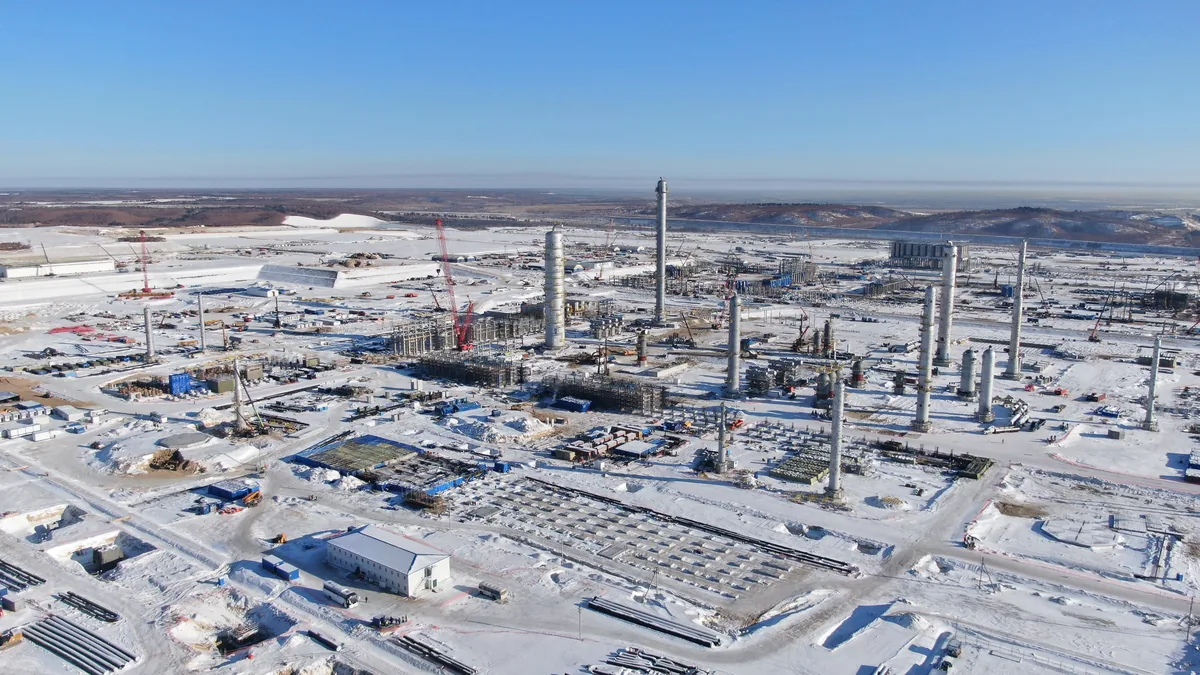
The plant had never run. It was in commissioning, weeks away from producing its first polyethylene, with feedstock going into storage and units being prepared for operation.
A plant in commissioning has no operating history. Its protective systems have not been proven in service, and it is carrying more people inside the fence than it ever will again. The investigation has only just opened and no cause has been established, so nothing here is a root cause analysis.
What is the Amur Gas Chemical Complex?
The Amur Gas Chemical Complex (AGCC) is a petrochemical plant built to turn light hydrocarbons into plastics feedstock. SIBUR, a Russian petrochemical company, holds 60 percent, and Sinopec, a Chinese state oil and gas company, holds 40 percent. SIBUR has put the project cost at $10 to $11 billion.
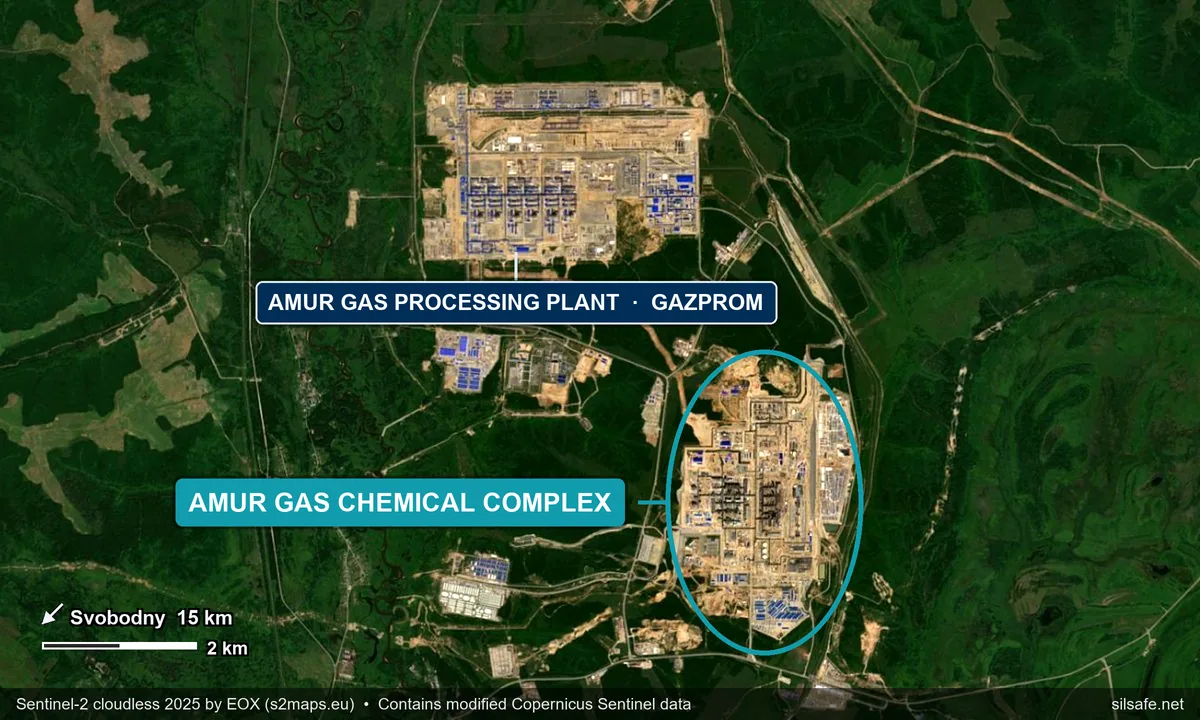
Gazprom is not an owner. Its neighbouring Amur Gas Processing Plant (GPP) supplies the feedstock, which arrives as ethane, propane and butane.
Design capacity is 2.3 million tonnes per year of polyethylene and 400,000 tonnes per year of polypropylene, which would make AGCC one of the largest polymer plants in the world.
Construction began in August 2020 against a completion date of May 2024, and ran roughly two years late, with first polyethylene targeted for the third quarter of 2026. SIBUR has said construction was completed in May 2026 and that testing was under way, storage was being filled with feedstock, and units were being prepared for operation. The plant had never operated commercially at the time of the fire.
Where does the plant sit?
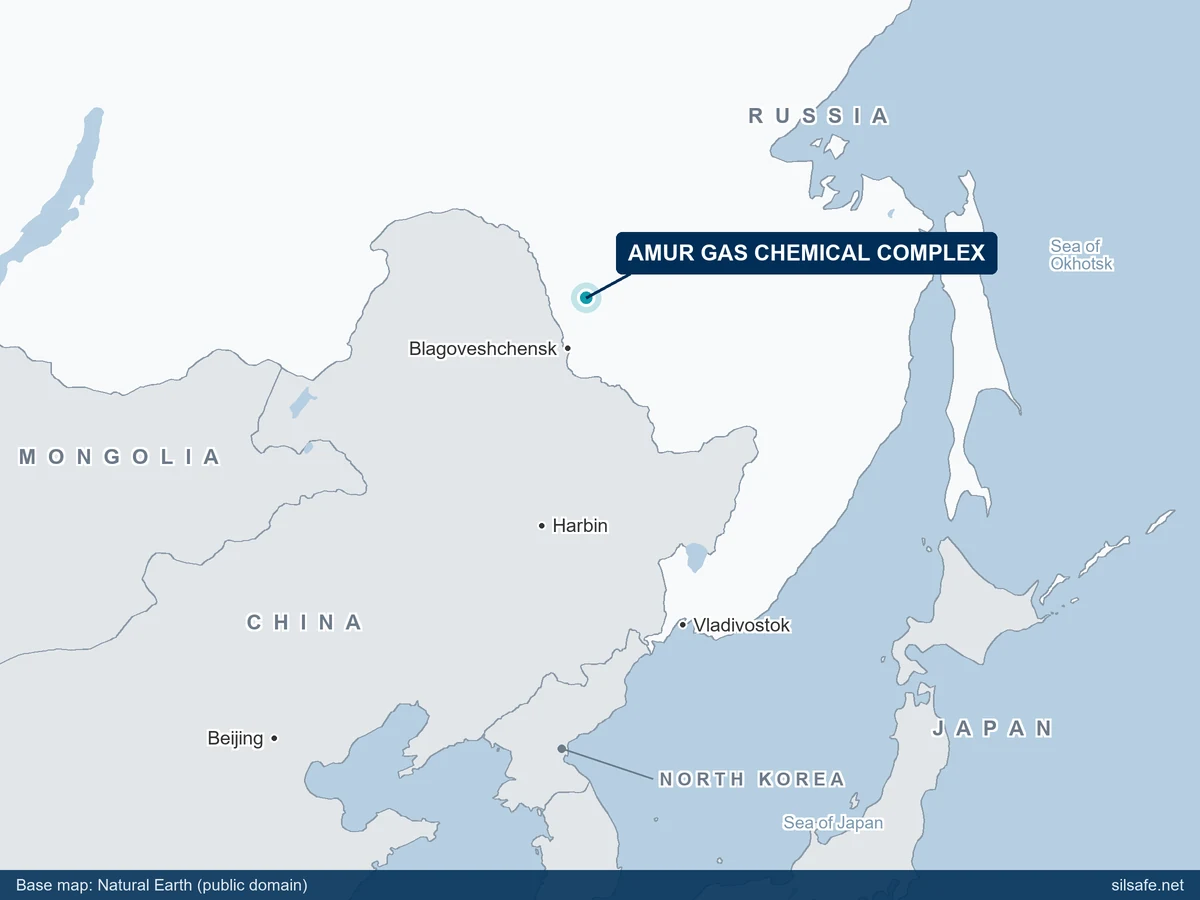
The complex is near the town of Svobodny in the Amur Region of the Russian Far East, roughly 15 km outside the town itself and around 150 km northeast of Blagoveshchensk, the regional capital on the Russia-China border.
This is not a plant inside a city, and it is not standing alone in open country. It sits in a purpose-built industrial cluster inside a special economic zone, immediately adjacent to Gazprom’s Amur GPP. That neighbouring plant occupies roughly 800 hectares and is one of the largest gas processing plants in the world, which gives a sense of the scale of the cluster AGCC was built into. Nearby towns were close enough that local authorities issued statements on air quality and public risk after the fire.
What occurred on August 25, 2026?
- An explosion followed by fire broke out during commissioning work, in what AGCC described as an auxiliary process area of the pyrolysis unit.
- Workers were evacuated and crews shut down the equipment that was in commissioning at the time.
- The fire took close to 24 hours to bring under control.
- Reported casualty figures rose over several days, from one death on the first day to a final confirmed toll of 15: one Russian national and 14 Chinese nationals, all employees of contracting organisations. Around 150 people received medical treatment.
- AGCC stated that the main equipment of the complex was not damaged.
No cause has been established. Unverified Russian media reports raised the possibility of a methanol container exploding, which carries no official confirmation. Investigators have reported no indications of sabotage.
What is the hazard at a plant like this?
The complex handles light hydrocarbons that are flammable at ambient conditions and are held under pressure, and in the process units at high temperature. Loss of containment plus an ignition source produces a fire or a vapour cloud explosion, and that pairing is what the protection at a facility like this is designed around.
Commissioning introduces hydrocarbon into systems that have previously held only air, water or nitrogen.
Why is commissioning the dangerous part in general?
A plant in commissioning carries far more people inside the fence than the same plant in operation, and most of them are contractors rather than the operator’s own staff. Every one of the 15 people who died at AGCC worked for a contracting organisation.
Transient phases, including startup and shutdown, occupy a small fraction of a facility’s operating hours and account for a disproportionate share of its process safety incidents. That is an industry-wide pattern documented across the process industry, not a characteristic of this site.
Trips and interlocks are also routinely bypassed during commissioning so that equipment can be exercised. That is normal practice, and it is also the point at which the protection a design assumed is not the protection actually present.
Functional safety puts formal gates at exactly this point for that reason. IEC 61511 Clause 14 sets out what commissioning has to confirm before a system goes forward to validation, and validation plus the stage 3 functional safety assessment (FSA) are what stand between a commissioned safety instrumented system (SIS) and a live process.
Do sanctions reach the safety systems?
The companies have said as much themselves. Two European contractors left the project in 2022: Linde, which had supplied its proprietary cracker technology along with engineering, procurement and site services for the ethane cracker, and Maire Tecnimont, the Italian engineering group leading the consortium delivering the polyethylene and polypropylene lines. SIBUR and Sinopec publicly stated that they revised the project strategy, redesigned it, and replaced contractors and licensors for those lines. SIBUR’s chief executive said in 2022 that sanctions on licensors and equipment suppliers meant reconfiguring the process technology on site.
Being cut off from Western suppliers is not the end of the game. Chinese, domestic Russian and other non-sanctioned vendors supply instruments, logic solvers and valves, and Sinopec’s own engineering arms were already contractors on the project. The question is not whether equipment was available. It is what changes when the equipment changes.
A SIL-rated device carries its integrity through three things that travel with it: the certificate, the safety manual, and a supply chain that can deliver the same device again. Substituting a device touches all three, and a substitution that is not certified to the same integrity breaks the chain a SIL verification calculation rests on. The practical exposures are:
- Like-for-like spares, so that a replacement carries the same failure rates the calculation used.
- Firmware and configuration tool support over the SIS lifetime.
- Access to the manufacturer’s failure rate data and proof test procedures.
No evidence links equipment sourcing to this fire, and none of this is a finding about AGCC. A fire at SIBUR’s Nizhnekamskneftekhim plant in March 2026 killed 12 people, and analysts have connected the wider pattern at Russian petrochemical sites to sanctions, restricted access to Western technology and financing, and consequences for maintenance and oversight. That reading is contested and sits outside anything investigators have confirmed.
What regulations apply?
Who regulates industrial safety in Russia?
Rostechnadzor, the Federal Service for Environmental, Technological and Nuclear Supervision, is the state supervisory body for industrial safety. Facilities of this type are registered as hazardous production facilities under federal industrial safety law, which brings licensing, inspection and equipment permitting under Rostechnadzor’s authority.
Rostechnadzor works through regional directorates, and the Far Eastern directorate covers the Amur Region.
Does Russia require functional safety and IEC 61511?
Russia adopts IEC 61508 and IEC 61511 as GOST R national standards, GOST R being the Russian national standards system maintained by Rosstandart.
These are identical adoptions, not Russian rewrites. GOST R IEC 61511-1-2018 is a direct translation of IEC 61511-1:2016 including its 2016 amendment, and it carries the designation “IDT,” meaning identical. A Russian site is working to the same requirements you are. Russian practice references the risk graph and layer of protection analysis (LOPA) methods of GOST R IEC 61511-3 for safety integrity level (SIL) selection in the same way the rest of the industry does.
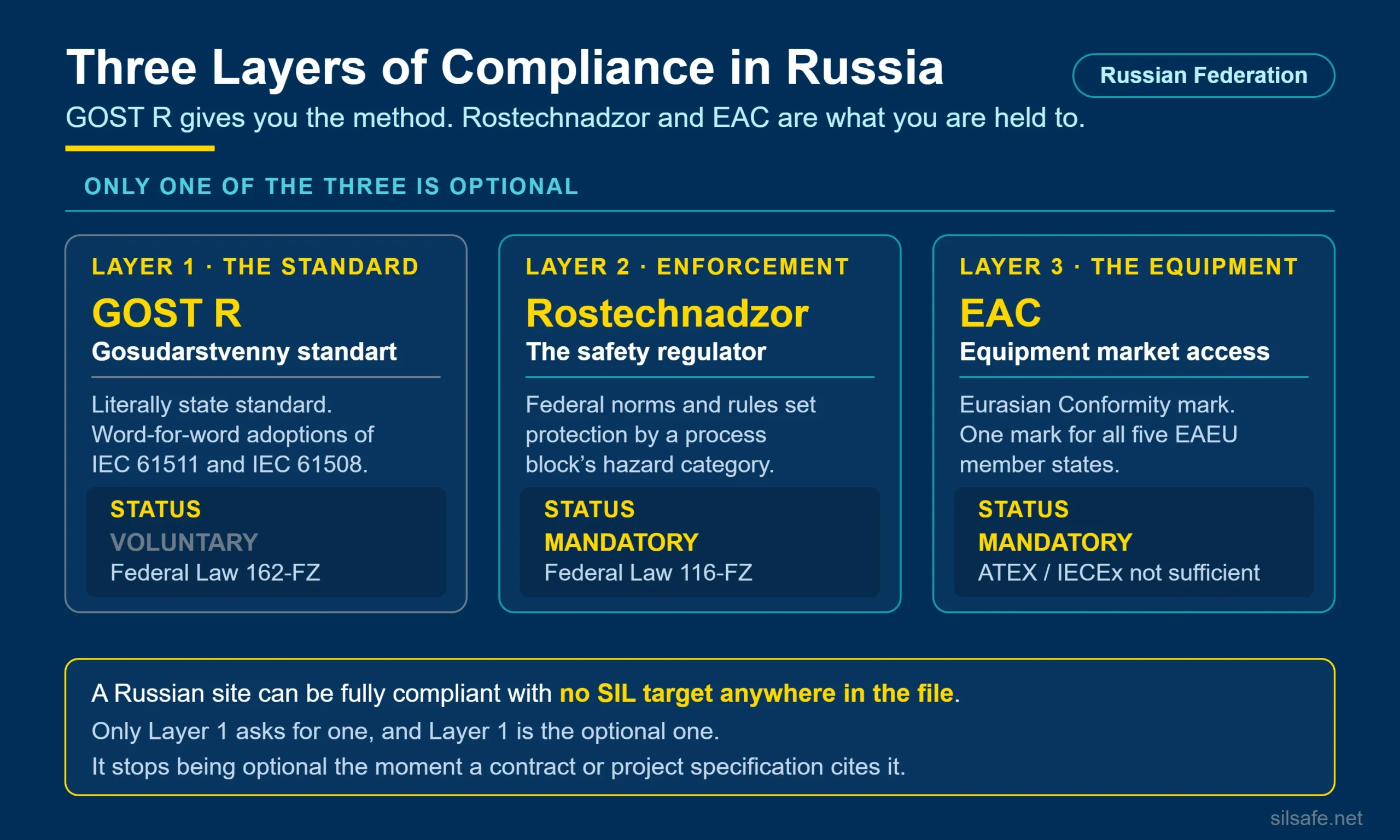
Adoption of the standard sets the design framework. The commissioning and validation gates are what test whether it was applied through the project.
What had Rostechnadzor already found at this site?
Rostechnadzor identified fire safety violations at the complex in the spring of 2026 and ordered them corrected by the end of May. The complex was fined over those breaches before the incident. The fire occurred in late August, after that deadline.
Whether those findings bear on this fire is unknown and may never be established publicly.
Who investigates an incident like this?
Russia’s Investigative Committee opened a criminal case under Part 1 of Article 217 of the Criminal Code, covering violation of industrial safety requirements at hazardous production facilities. The Investigative Committee is a separate federal law-enforcement body and is not part of Rostechnadzor. Rostechnadzor is the technical regulator and inspector, while the Investigative Committee pursues criminal liability.
AGCC also formed its own commission to establish the cause. There is no independent national investigation board publishing public technical reports the way the US Chemical Safety Board (CSB) does, so what reaches the public will be at the state’s discretion.
What we do not know at the time of writing
- What initiated the explosion, which system was involved, and what work was under way at that moment.
- Whether functional safety was applied to this plant at all, and to what depth. Given the project’s scale, its European original licensors and contractors, and Russia’s adoption of IEC 61511 as a national standard, it is highly likely that it was. Beyond that, what state the safety instrumented systems were in, which functions were live, and which were bypassed for commissioning.
- Whether the spring fire safety findings had been closed out.
- When the investigation will report, and how much of it will be published.
Frequently Asked Questions
I keep seeing “pyrolysis unit” in the coverage and I have never come across the term. I work in biogas. What is it?
A pyrolysis unit cracks light hydrocarbons at high temperature into ethylene and propylene, the building blocks for the plastics this plant was built to produce.
Why were so many of the workers at a plant in the middle of Russia Chinese? Is that normal?
Yes, for this project. AGCC is a joint venture with Sinopec holding 40 percent, and Chinese engineering and construction firms took a large share of the work, particularly after the European contractors left in 2022. Those firms bring their own labour. Everyone who died was a contractor employee, which is what a commissioning workforce usually looks like.
It is also increasingly normal in Russia generally. Russia issued roughly 240,000 work permits to foreign nationals in 2025, and China was the largest single source at about 92,000, up around half on the prior year. The 2026 quota was set higher still, with the great majority of it earmarked for skilled workers on industrial and infrastructure projects.
I never considered that the Ukraine war could impact functional safety. Is that true?
We had not considered it either until researching this article, and we are not saying it happened here. But other practitioners have raised it, and the mechanism is straightforward once you look at it. Sanctions do not make instruments unavailable, they change which instruments you can get, and a SIL-rated device you cannot re-order is a device you cannot maintain to the integrity your verification assumed. Spares, firmware support, failure rate data and proof test procedures all travel with the supply chain. When the supply chain changes, those follow.
We are commissioning a unit right now and the SIS is not fully validated yet. Is it wrong to be introducing hydrocarbon before that is finished?
Not automatically, and almost nobody waits for a fully closed validation report before any hydrocarbon moves. What matters is that you know exactly which safety functions are live and which are not, that every bypass is authorised, logged and time-limited, and that you have written compensating measures in place for the ones that are down. The failure is not introducing feedstock early. It is losing track of what protection you actually have while you do it.
Fifteen people died and the company says the main equipment was undamaged. How does that happen?
Commissioning puts people where they never are again. During operation a unit like this runs with a handful of people in the field and the rest in a control room behind blast-rated walls. During commissioning there are hundreds of contractors on scaffolds, in trenches and inside the unit, doing work that only exists once. A fire that a steel structure shrugs off can still be the deadliest event in that plant’s life.
Further Reading
From SIL Safe
- The Qatar Gas Plant Explosion: What We Know So Far
- The Haldia Naphtha Pipeline Fire: What We Know So Far
- The Longview Chemical Tank Implosion: What We Know So Far
- The Basra Ammonia Leak: What We Know So Far
- Functional Safety Assessment vs Audit
- Functional Safety for the Process Industry
External resources
- Rostechnadzor: official site (in Russian)
- Rostechnadzor: Far Eastern Directorate (in Russian)
- The Amur Gas Chemical Complex: project description
- ABC News: A fire at a gas and chemical plant in Russia’s Far East has killed 15
- The Moscow Times: Fire at Amur Gas Chemical Complex kills workers, injures dozens more
- Meduza: Fire at Russia’s Amur Gas Chemical Complex kills 15
- OSW: Fire at Amur Gas Chemical Complex leaves 15 casualties ahead of Russian-Chinese project launch
- CCPS / AIChE: Guidelines for Process Safety During the Transient Operating Mode
Functional safety is complex, and the stakes are high. If you have questions about your SIS design, SIL verification, or where to start with IEC 61511, the team at SIL Safe is here to help. Reach out to us today.